
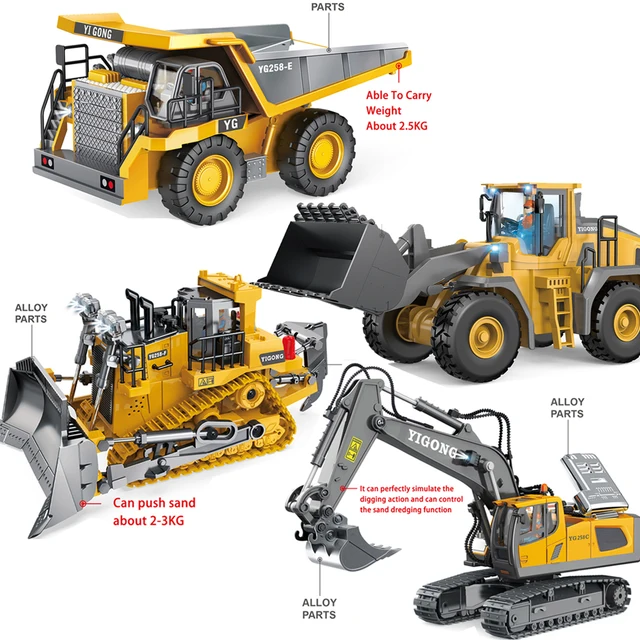
Remote control vehicles sit at the top of the children’s toy price ladder — in our own range this category runs from roughly $12 to $43 per unit, against $0.70–3.00 for fidget and party-favour items. Higher unit price means higher buyer scrutiny, so specification accuracy matters more here than anywhere else in the catalogue.
What is in this range
Our vehicle ranges currently cover 17 remote control car listings, 5 electric remote-controlled models, 3 remote-controlled aircraft, plus 7 inertia cars and 3 die-cast vehicle lines. Typical specifications in the current range:
- Scale: 1:64 mini trucks through 1:43, 1:18, 1:16 and 1:12 off-road builds, plus 1:14 4WD climbing trucks.
- Control: 2.4 GHz radio systems across the range.
- Format: all-terrain monster trucks, rock crawlers, trophy trucks and military-style 6WD models.
What buyers should pin down in writing
- Scale convention: “1:16” is not standardised across factories. Confirm the actual assembled length and width in centimetres.
- Frequency band: 2.4 GHz allows several vehicles to run together without interference. Confirm the band and the transmitter’s channel handling for your market.
- Battery and shipping: battery chemistry and whether cells ship installed change both the compliance paperwork and the freight method. Ask explicitly rather than assuming.
- Spare parts availability: at these price points buyers get asked for replacement tyres, battery packs and controllers. Ask what spares can be supplied and at what ratio.
- Testing documentation: our lines are listed with ASTM F963 / EN71 / CE compliance. For battery-powered products ask us for the test report covering the exact SKU, including any battery-specific documentation.
- Minimum order: the figure on each product page is definitive; it varies by item.
Battery shipping is the detail that delays orders
Most first-time RC orders lose a week or two on battery paperwork, so it is worth settling before production starts. Three questions decide the freight method:
- Cells installed or shipped separately? A vehicle shipping with the battery already fitted moves under different dangerous-goods rules than one shipping with loose cells in the carton. Both are workable; the answer determines which forwarder can quote and what the certificate set looks like.
- Lithium or NiMH? Lithium chemistries need a UN38.3 test summary and an MSDS on file before a carrier will accept the booking. NiMH packs avoid most of this.
- Is the charger market-correct? Plug type, input voltage and whether a USB cable or a wall adapter is included should be fixed in the specification, not decided at packing.
Our usual practice is to quote the battery configuration alongside the product so these three answers arrive together rather than as separate follow-ups.
Channel and packaging
RC vehicles are bought for two very different settings, and packaging should follow the channel:
- Retail shelf: window box or colour box with clear scale and frequency information on the front. Buyers in this channel need the box to answer “how fast, how big, what batteries” without staff help.
- Online and marketplace: a plain brown box plus a strong outer carton is often preferred, because the marketplaces’ own fulfilment handling punishes oversized packaging. Confirm whether retail packaging can be removed to reduce cube.
Cube matters more in this category than in most toy lines. A 1:12 truck is a large, light carton, so freight is charged on volume rather than weight — ask for the carton dimensions and units per carton before you compare landed cost against a competitor’s quote.
Why buyers pair this with cheaper lines
RC vehicles are commonly ordered alongside lower-cost vehicle items — die-cast models and inertia cars — so a single display can serve both a low-price impulse buyer and a higher-ticket gift buyer. Our die-cast and inertia ranges exist for exactly that reason. Combining them in one shipment usually improves freight efficiency per carton.
Three mistakes we see in RC enquiries
- Ordering to a scale number instead of a dimension. A buyer specifies “1:18” expecting a shelf-ready size, receives a truck that is 6 cm longer than planned, and the display does not fit.
- Treating the battery as a product detail instead of a logistics decision. This is the single most common cause of a shipment missing its sailing.
- No spare-parts ratio agreed up front. Tyres, battery packs and controllers are the parts end customers ask for. Agreeing a small spares percentage in the original order is cheaper than a later air-freight top-up.
Lead time
Electronics add steps to production and testing, so RC orders generally need a longer window than non-powered goods. If your retail target is a Q4 shelf date, start the specification conversation earlier than you would for a plush or fidget order. Our Q4 wholesale buying calendar sets out the order windows we usually work to.
Frequently asked
Do you support OEM and custom packaging? Yes — custom colours, logos and packaging are available on RC lines. Send the artwork or the brand guidelines with your enquiry so we can price the tooling stage rather than guessing at it.
Can I order a mixed container across several vehicle types? Yes. Mixed orders are normal in this category and usually improve freight efficiency.
Which test reports will I receive? Reports are issued per item and per standard, so tell us the SKU and the destination market and we will send the matching documentation. See our toy safety certifications guide for what each standard covers.
Sourcing RC and vehicle models? Request a wholesale quote with the scale, quantity and target market — we will reply with factory pricing and sample options within 24 hours.



Add comment