
Why toy safety certifications matter for wholesale buyers
If you are importing children’s toys for the US, EU or UK market, safety certifications are not optional paperwork — they are the first thing customs, retailers and regulators check. A single non-compliant shipment can be detained, fined or recalled, and that risk multiplies when you buy from a factory that cannot prove compliance.
This guide explains the four most important toy safety standards — ASTM F963, CPSIA, EN71 and CE — what each one covers, which ones apply to your market, and what to look for when choosing a toy manufacturer.
What is ASTM F963?
ASTM F963 is the US standard consumer safety specification for toy safety, developed by ASTM International. It covers mechanical and physical properties, flammability, and limits on heavy elements such as lead, cadmium and barium. It is referenced by the US Consumer Product Safety Commission (CPSC) and is effectively mandatory for toys sold in the United States.
Key areas covered include small parts (choking hazards), sharp edges and points, cords and straps, packaging film thickness, and toxic element limits. Testing is performed by CPSC-accredited third-party laboratories.
What is CPSIA?
The Consumer Product Safety Improvement Act (CPSIA) is a US federal law that strengthens toy safety regulation. The two areas buyers hear about most are:
- Lead content limits — children’s products must meet strict lead limits in paint and substrate materials.
- Phthalate limits — restrictions on phthalates in toys and child care articles.
- Children’s Product Certificate (CPC) — importers must maintain a certificate documenting that the product meets applicable rules, based on third-party testing.
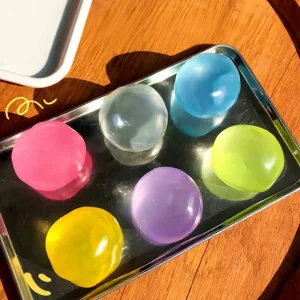
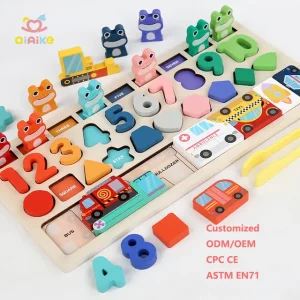
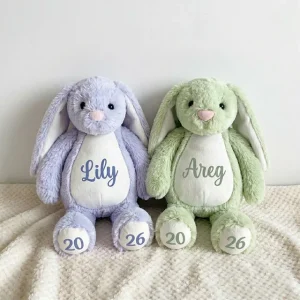
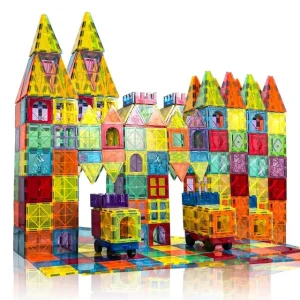
For plush toys, soft toys, squishies and building sets, CPSIA compliance typically means testing for lead, phthalates and physical safety under ASTM F963.
What is EN71 and the CE mark?
EN71 is the European standard for toy safety, covering mechanical/physical properties, flammability and chemical requirements. It is the standard referenced by the EU Toy Safety Directive 2009/48/EC.
The CE mark is the EU conformity mark. For toys, CE marking requires the manufacturer to ensure the product meets the Toy Safety Directive, which in practice means EN71 testing (parts 1, 2 and 3 are the core), plus documentation such as the Declaration of Conformity and technical file. If you sell into the EU or UK, CE marking (and UKCA for the UK) is required for most toys.
Which certifications do you need for your market?
- United States: ASTM F963 + CPSIA (lead, phthalates) + CPC documentation.
- European Union: EN71 (parts 1-3 core) + CE marking + Declaration of Conformity.
- United Kingdom: EN71 + UKCA marking (with a transition period for CE recognition).
- Other markets: check local regulations — for example, Australia (AS/NZS ISO 8124) and Canada (CCPSA / SOR/2011-17).
Many factories that export widely, including Runda Toy Factory, hold ASTM F963, CPSIA, EN71 and CE compliance across their production lines, so a single supplier can serve both the US and EU markets.
How Runda Toy Factory ensures compliance
As a factory-direct children’s toy manufacturer, Runda Toy Factory runs its own production lines for plush toys, soft-filled products, squeeze and squishy toys, and building block sets. Compliance is managed through:
- Materials control — PP cotton filling, plush fabric and PU foam are sourced with restricted-substance checks.
- Batch testing — third-party lab testing to ASTM F963 / CPSIA / EN71 / CE for export batches.
- Documentation — certificates, test reports and declarations provided for wholesale and OEM orders.
- Retailer-ready programs — compliance paperwork prepared for the US and EU markets, including retailer compliance questionnaires.
See our Certifications page for the certificates we hold, or send us your target market when you request a quote and we will confirm the exact compliance package for your order.
Frequently Asked Questions
Do you test every production batch?
Yes. Export batches are tested by third-party laboratories against the standards required for the destination market, and test reports are provided with the order documentation.
Can you provide certificates for both the US and EU markets?
Yes. Runda Toy Factory maintains ASTM F963, CPSIA, EN71 and CE compliance across its main product lines, so we can prepare documentation for both US and EU/UK buyers from the same order.
How long does compliance testing take?
Typical third-party testing takes 7-15 working days depending on the product and laboratory schedule. We advise buyers to factor this into their sourcing timeline.
Do custom OEM designs need re-testing?
Custom materials, colors or packaging can change the compliance picture. We re-verify restricted substances and physical safety for custom runs so the finished product still meets the required standards.

Add comment